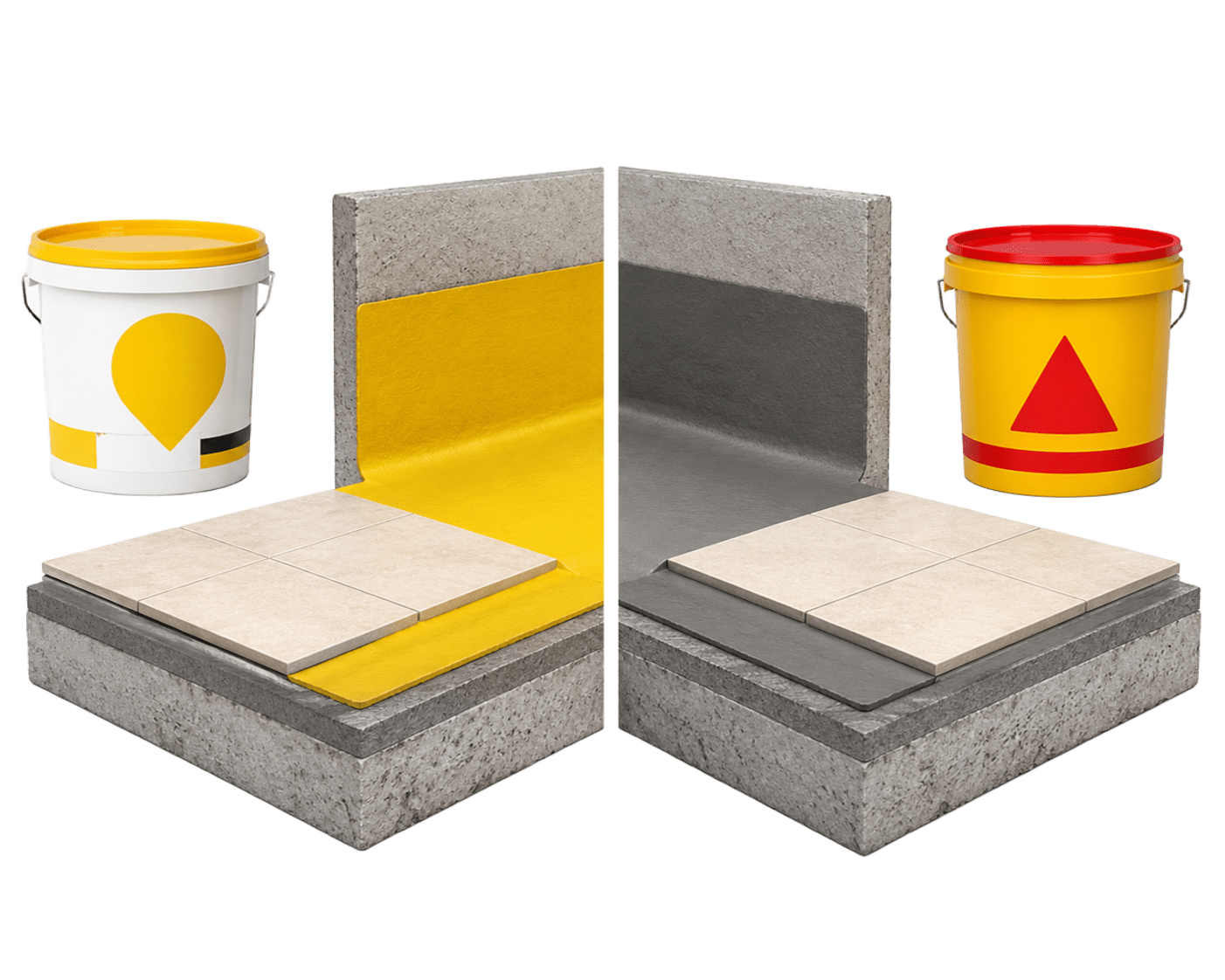
Choosing between Weber vs Sika waterproofing depends on the type of project, the surface being protected, the expected water exposure and the final finish being installed. Both systems are widely used for wet areas, but the correct choice depends on whether you are waterproofing bathrooms, terraces, balconies, water tanks or other moisture-exposed structures.
In Kenya, waterproofing failures are often caused by incorrect product selection, poor surface preparation or skipping important installation steps. A bathroom may have expensive tiles and modern fittings, but without a reliable waterproof layer underneath, moisture can still penetrate walls and floors.
The purpose of a waterproofing system is to create a protective barrier between water sources and the building structure. This barrier helps prevent:
- Water seepage below tiles
- Damp patches on ceilings
- Mould growth
- Tile adhesive failure
- Structural deterioration
For residential bathrooms in Nairobi, apartment developments in Kiambu, commercial buildings in Mombasa and outdoor areas exposed to weather changes, selecting the right waterproofing system is an important construction decision.
KK Empire Trades Limited supports homeowners, contractors and developers with bathroom renovation supplies, tiles, sanitaryware and construction materials suitable for Kenyan projects. Explore available renovation products through the KK Empire Trades Limited shop.
Weber vs Sika Waterproofing: Which System Is Better for Kenyan Wet Areas?
Weber vs Sika waterproofing cannot be decided by brand name alone because each system has different product formulations and recommended applications. The best choice depends on the wet area requirement, substrate condition, exposure level and compatibility with the final tile installation.
Both Weber and Sika manufacture construction solutions designed for moisture protection. However, contractors should evaluate the specific waterproofing product rather than comparing brands generally.
A bathroom shower area, for example, has different requirements compared with a rooftop terrace or underground water tank.
Factors that influence the decision include:
- Type of waterproofing membrane
- Surface preparation requirements
- Crack resistance
- Coverage per kilogram
- Drying and curing time
- Tile adhesive compatibility
- Expected water exposure
- Installation conditions
Understanding Weber vs Sika Waterproofing Systems
Weber vs Sika waterproofing systems are designed to protect surfaces from water penetration using specialised coatings, membranes and sealing products. Understanding how each system works helps contractors choose suitable solutions for bathrooms, terraces and other wet areas.
Before comparing performance, it is important to understand what waterproofing systems actually do.
A complete waterproofing solution normally includes:
| Component | Purpose |
|---|---|
| Primer | Improves bonding between surface and waterproof coating |
| Waterproof membrane | Creates a moisture barrier |
| Reinforcement tape | Protects corners and movement joints |
| Sealants | Protect pipe outlets and gaps |
| Tile adhesive | Fixes tiles after waterproofing |
Waterproofing is normally installed before tiling because tiles and grout are not completely waterproof on their own. Water can move through grout lines, corners and small gaps over time.
Weber Waterproofing System Overview
Weber waterproofing products are commonly used in construction and renovation projects where moisture protection is required before installing tiles or other finishes.
Typical applications include:
- Bathroom floors
- Shower areas
- Wet rooms
- Balconies
- Terraces
A Weber waterproofing system is often selected for projects requiring:
- Compatibility with tile installation
- Easy application methods
- Protection against water penetration
- Suitable performance in residential wet areas
For bathroom renovations, waterproofing should be combined with suitable tiles and sanitaryware. KK Empire Trades Limited provides bathroom renovation solutions in Kenya for homeowners upgrading their spaces.
Sika Waterproofing System Overview
Sika waterproofing systems are widely used in residential, commercial and industrial construction applications.
Common applications include:
- Bathrooms
- Balconies
- Terraces
- Concrete structures
- Water-retaining areas
A Sika waterproofing system may be selected where projects require:
- Strong moisture protection
- Flexible waterproofing solutions
- Compatibility with different construction surfaces
- Solutions for demanding environments
For areas exposed to frequent water contact, correct application is essential. Even premium waterproofing products require proper surface preparation and installation procedures.
Weber vs Sika Waterproofing Performance Comparison
The performance difference between Weber vs Sika waterproofing depends on the specific product used, application method and project requirements. Both systems can provide effective protection when correctly installed on properly prepared surfaces.
The following comparison helps explain the factors contractors consider:
| Feature | Weber Waterproofing | Sika Waterproofing |
|---|---|---|
| Main use | Wet areas and tile preparation | Wet areas, construction and specialised applications |
| Application areas | Bathrooms, showers, terraces | Bathrooms, terraces, structures |
| System type | Membranes and coatings | Membranes and specialised solutions |
| Surface preparation | Required before application | Required before application |
| Tile compatibility | Depends on selected product | Depends on selected product |
| Installation quality | Critical for performance | Critical for performance |
| Best selection method | Match product to project | Match product to project |
Weber vs Sika Waterproofing for Bathroom Renovations in Kenya
For bathroom projects, Weber vs Sika waterproofing selection should consider water exposure, tile type, substrate condition and installation requirements. A correctly installed waterproofing layer protects bathroom floors and walls from hidden moisture damage.
Bathrooms are among the most common areas requiring waterproof protection because they experience continuous water exposure.
Important bathroom waterproofing locations include:
- Shower floors
- Shower walls
- Bathtub surrounds
- Floor drains
- Wall-floor joints
- Plumbing outlets
In Nairobi homes and apartments, waterproofing is especially important where bathrooms are located above occupied rooms. A failed waterproofing layer can result in expensive repairs affecting ceilings and finishes below.
In coastal areas such as Mombasa and Malindi, humidity makes moisture management even more important. Waterproofing helps reduce the risk of dampness and mould development when combined with proper ventilation.
