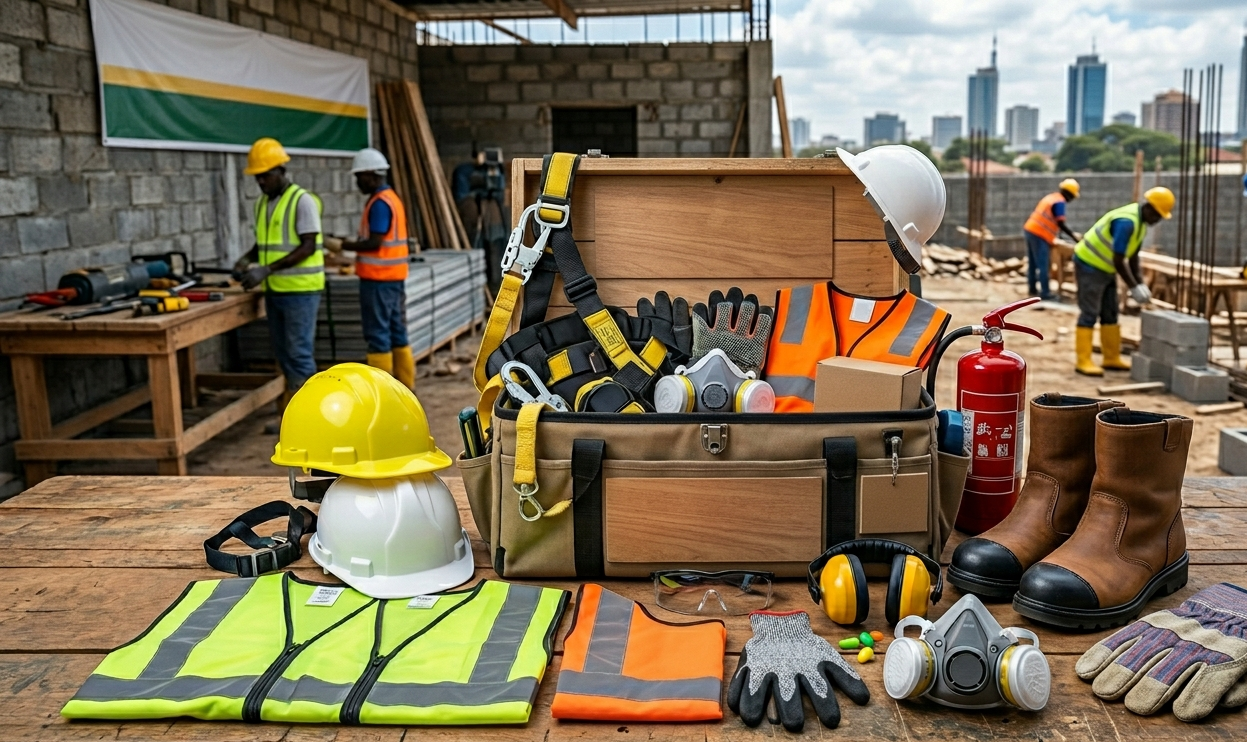
Construction sites in Kenya—whether in Nairobi, Rongai, Kisumu, or Eldoret—are high-risk environments. From falling objects to sharp materials and electrical hazards, the risks are real and frequent.
The difference between a safe and unsafe site often comes down to one thing: proper safety equipment.
At KK Empire Tradess Limited, contractors and developers can access reliable construction supplies that support safe and efficient project execution.
Browse available construction materials here:
Explore construction supplies and hardware
What Is Construction Safety Equipment?
What is construction safety equipment and why is it important?
Construction safety equipment refers to protective gear designed to minimize injury risks on construction sites. It is essential for protecting workers from hazards such as falling objects, sharp materials, dust, and electrical exposure.
Construction safety equipment (also known as PPE – Personal Protective Equipment) includes:
- Helmets
- Gloves
- Safety boots
- Reflective clothing
- Eye and face protection
- Fall protection systems
These items are not optional—they are mandatory for compliance and worker safety under Kenyan construction regulations.
Types of Construction Safety Equipment
What are the main types of safety equipment used in construction?
The main types of construction safety equipment include head protection, hand protection, foot protection, eye protection, respiratory gear, and fall protection systems. Each type is designed to address specific risks on site.
1. Head Protection (Safety Helmets)
Purpose: Protects against falling objects and head injuries
Features:
- High-impact resistance
- Adjustable fit
- Ventilation for hot climates
2. Hand Protection (Gloves)
Purpose: Prevents cuts, abrasions, and chemical exposure
Types:
- Rubber gloves (wet work)
- Leather gloves (heavy-duty tasks)
- Cut-resistant gloves
3. Foot Protection (Safety Boots)
Purpose: Protects against sharp objects and heavy impacts
Key Features:
- Steel toe caps
- Slip-resistant soles
- Water-resistant materials
4. Eye & Face Protection
Purpose: Shields from dust, sparks, and debris
Includes:
- Safety goggles
- Face shields
5. Respiratory Protection
Purpose: Prevents inhalation of dust and harmful particles
Common Equipment:
- Dust masks
- Respirators
6. Fall Protection Equipment
Purpose: Prevents injuries from working at heights
Includes:
- Safety harnesses
- Lifelines
- Guardrails
Why Safety Equipment Is Critical in Kenya
Why is safety equipment essential on Kenyan construction sites?
Safety equipment is essential in Kenya because construction sites face risks from manual labor, unpredictable weather, and high-density urban projects. Proper gear reduces accidents, improves compliance, and protects workers.
Common Risks in Kenya
- Falling tools on high-rise buildings in Nairobi
- Slippery surfaces during rainy seasons
- Dust exposure in dry regions like Machakos
Using proper gear minimizes:
- Workplace injuries
- Project delays
- Legal liabilities
Compliance with Kenyan Safety Standards
What safety regulations apply in Kenya?
Construction safety equipment must comply with Kenyan standards such as KEBS certification and occupational safety regulations. Compliance ensures worker protection and avoids legal penalties.
Key Regulatory Bodies & Standards
- KEBS (Kenya Bureau of Standards)
- DOSHS (Directorate of Occupational Safety and Health Services)
- Kenya Building Code 2024
Why Compliance Matters
- Prevents workplace accidents
- Ensures legal project approval
- Reduces liability risks
Specifications Table (Example: Safety Helmet)
| Parameter | Specification |
|---|---|
| Material | High-density polyethylene (HDPE) |
| Impact Resistance | Certified |
| Weight | 300–400g |
| Adjustment Type | Strap-adjustable |
| Ventilation | Yes |
| Standard | KEBS compliant |
| Use | Construction sites |
Choosing the Right Safety Equipment
How do you choose the right safety gear for construction?
Choosing the right safety equipment depends on the type of work, environmental conditions, and risk level. Contractors should prioritize certified, durable, and task-specific gear.
Key Considerations:
- Nature of work (electrical, masonry, roofing)
- Exposure to hazards
- Comfort for long working hours
- Durability in Kenyan climate
Explore durable materials and contractor supplies here:
Browse reliable construction products
Climate Considerations in Kenya
How does climate affect safety equipment selection?
Kenyan climate affects safety gear by influencing comfort, durability, and effectiveness. Equipment must handle heat, humidity, dust, and rain.
Regional Factors:
Coastal Areas (Mombasa)
- High humidity → corrosion-resistant gear
- Breathable materials
Nairobi & Central Kenya
- Cold mornings → insulated gloves
- Wet conditions → slip-resistant boots
Arid Areas (Machakos, Kajiado)
- Dust → respiratory protection
- Heat → ventilated helmets
Benefits of Using Reliable Suppliers
Why should contractors buy safety equipment from reliable suppliers?
Reliable suppliers ensure consistent quality, availability, and compliance with safety standards, helping contractors maintain safe and efficient worksites.
Advantages:
- Genuine certified products
- Consistent stock availability
- Competitive pricing
- Technical guidance
Learn more about trusted sourcing from the KK Empire Tradess Limited company profile.
Storage and Maintenance of Safety Equipment
How should safety equipment be maintained?
Safety equipment should be regularly inspected, cleaned, and stored properly to maintain effectiveness and extend its lifespan.
Maintenance Tips:
- Inspect gear before use
- Replace damaged equipment immediately
- Store in dry, clean areas
- Avoid prolonged sun exposure
Real Kenyan Use Case
A contractor in Nairobi working on a commercial building improved site safety by:
- Introducing mandatory PPE
- Sourcing reliable gear from KK Empire’s shop
Results:
- Reduced injuries by 40%
- Improved worker productivity
- Faster project completion
Common Mistakes to Avoid
What mistakes do contractors make with safety equipment?
Common mistakes include using low-quality gear, failing to enforce PPE usage, and neglecting maintenance. These errors increase accident risks and project delays.
Avoid:
- Buying uncertified equipment
- Ignoring worker compliance
- Reusing damaged gear
FAQs: Construction Safety Equipment in Kenya
What is the most important safety equipment on site?
Helmets, boots, gloves, and reflective clothing are the most essential items.
Is safety equipment mandatory in Kenya?
Yes, Kenyan regulations require proper PPE on construction sites.
How much does safety equipment cost in Kenya?
Prices vary, but basic PPE kits can range from KES 2,000 to KES 15,000.
How often should safety gear be replaced?
Replace equipment immediately after damage or wear that affects performance.
Can contractors be fined for lack of PPE?
Yes, non-compliance can result in penalties and project shutdowns.
Where can I buy safety equipment in Kenya?
You can source reliable construction supplies from trusted suppliers like KK Empire Tradess Limited.
Contact us
Contact KK Empire Tradess Limited
info@kketrades.com
Call/WhatsApp: +254 718 990 010
Website: https://kkempiretradesslimited.com/
Delivery Availability:
Fast delivery within Nairobi and across Kenya including Kiambu, Nakuru, Kisumu, Eldoret, Mombasa, Thika, Kitengela, Machakos, and surrounding regions.
