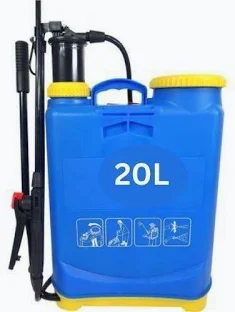
A knapsack sprayer is an essential tool for farmers, gardeners, landscapers and pest-control operators. It helps distribute liquid fertilisers, herbicides, pesticides and other approved agricultural treatments across crops, lawns and garden plants. Choosing the right model can save time, reduce physical effort and help achieve more consistent spraying.
If you are searching for the knapsack sprayer 20L price in Kenya, you will find different prices depending on tank capacity, pump construction, brand, operating mechanism and included accessories. A basic manual sprayer is generally a different investment from a rechargeable battery-powered or dual-mode model.
The two common decisions are whether to buy a 16-litre or 20-litre sprayer and whether to choose manual or battery operation. This guide explains the differences, what to inspect before buying and how to choose a suitable agricultural sprayer for your work in Kenya.
What Is a Knapsack Sprayer?
A knapsack sprayer is a portable spraying machine designed to be carried on the operator’s back. It has a tank for holding a liquid mixture, a pumping mechanism that creates pressure, a hose, a spray lance and a nozzle.
The operator uses the equipment to apply an appropriate liquid treatment to crops, plants or other approved surfaces.
Depending on the model, pressure is generated by manually operating a lever or by an electric pump powered by a rechargeable battery. Some models combine both operating methods.
Knapsack sprayers are commonly used for:
- Applying approved pesticides to crops.
- Spraying herbicides for weed management.
- Applying liquid fertilisers and foliar feeds.
- Treating lawns, gardens and ornamental plants.
- Applying approved pest-control solutions.
- Maintaining small farms, nurseries and landscaped areas.
Always use the sprayer in accordance with the chemical manufacturer’s label. A sprayer’s ability to hold a liquid does not mean every chemical is suitable for every tank, seal, hose or nozzle.
Knapsack Sprayer 20L Price in Kenya: What Determines the Cost?
The knapsack sprayer 20L price in Kenya varies according to the model and its features. A basic manual pump, a heavy-duty manual unit and a battery-operated sprayer have different components and operating capabilities.
Before comparing prices, establish what is included in the product.
Manual or Battery Operation
Manual sprayers use a hand-operated pump to build pressure. They usually have a simpler operating system and do not require battery charging.
Battery sprayers use an electric pump to maintain spraying pressure. They reduce repeated manual pumping but introduce additional components, including a battery, charger and electrical controls.
Dual-mode models combine battery operation with manual pumping. Their price may reflect the additional operating flexibility.
Pump Construction
The pump is one of the most important parts of a knapsack sprayer. Its construction affects pressure generation, maintenance and service life.
When comparing products, check the pump material, seals, availability of replacement parts and whether the pump is designed for the chemicals you intend to use.
Tank Material and Construction
A good tank should be sturdy, appropriately sealed and resistant to the intended spraying chemicals.
Check the tank for cracks, weak joints, leaks and clear volume markings. UV-resistant plastic can be useful for equipment exposed to outdoor conditions, but the manufacturer’s chemical compatibility guidance remains important.
Nozzles and Accessories
Some sprayers include interchangeable nozzles for different spray patterns. Others may have a single nozzle or require accessories to be purchased separately.
Confirm whether the product includes a spray lance, hose, filters, shoulder straps, seals, nozzles, battery and charger where applicable.
Brand, Warranty and Spare Parts
The purchase price is not the only cost to consider. A sprayer with accessible replacement seals, filters, lances and other components may be easier to maintain.
Ask about the warranty, availability of spare parts and after-sales support before making a decision.
16L vs 20L Knapsack Sprayer: Which Size Is Better?
Tank capacity determines how much liquid the sprayer can carry in one filling. The choice between 16 litres and 20 litres depends on the area being treated, the operator’s strength, the spraying frequency and how far the equipment must be carried.
16L Knapsack Sprayer
A 16L knapsack sprayer is suitable for users who want a smaller liquid capacity and a manageable load.
Its advantages include:
- Less liquid to carry compared with a full 20L tank.
- Potentially easier handling for shorter spraying sessions.
- Less frequent need for a large filling container.
- A practical option for smaller gardens, nurseries and selected crop applications.
A 16L model may be suitable where the operator works in small sections or needs to move frequently between plants.
However, it requires more refills than a 20L model when treating an area that needs a large volume of spray mixture.
20L Knapsack Sprayer
A 20L knapsack sprayer carries four litres more liquid than a 16L model. This can reduce the number of refills required during larger spraying tasks.
Its advantages include:
- Greater liquid capacity per filling.
- Fewer interruptions for refilling.
- Useful capacity for larger gardens and farm operations.
- A practical option for users who regularly spray larger areas.
The main consideration is weight. A full 20L tank contains approximately 20 kilograms of liquid before adding the weight of the sprayer itself. This can make it tiring to carry over long distances or during extended spraying sessions.
16L vs 20L Comparison
| Feature | 16L sprayer | 20L sprayer |
|---|---|---|
| Tank capacity | 16 litres | 20 litres |
| Liquid carried | Lower | Higher |
| Refilling frequency | More frequent | Less frequent |
| Full-load weight | Lower | Higher |
| Typical suitability | Small gardens and shorter tasks | Larger areas and longer tasks |
| Portability | Generally easier to manage | Heavier when full |
The best size is not automatically the largest one. Choose a capacity that you can carry comfortably and that matches the volume required for your work.
Manual vs Battery Knapsack Sprayer: Which Should You Buy?
The operating system affects how much effort is required to maintain spraying pressure. Both manual and battery-powered sprayers have useful applications.
Manual Knapsack Sprayer
A manual knapsack sprayer uses a lever or handle to operate its pump. The operator pumps the mechanism to build and maintain the required pressure.
Benefits include:
- No battery charging required.
- Straightforward operation.
- Fewer electrical components.
- A practical option for occasional spraying.
- Potentially simpler maintenance.
The main disadvantage is physical effort. Repeated pumping can become tiring, especially when working over large areas or for long periods.
A manual model can be a good choice for small farms, gardens and users who prefer a simple machine.
Battery Knapsack Sprayer
A battery knapsack sprayer uses an electric pump to generate pressure. The operator switches on the system rather than repeatedly pumping a lever.
Benefits include:
- Reduced manual pumping.
- Convenient operation during longer spraying sessions.
- Less repetitive physical effort.
- Useful for users who spray frequently.
However, battery-powered models require charging and proper battery care. The battery, charger, switches and pump also introduce components that may need replacement or servicing.
Before buying, check the battery type, charging requirements, expected operating time and availability of replacement batteries.
Dual-Mode Battery and Manual Sprayer
Some models offer both battery-powered and manual operation. This provides an alternative when the battery is discharged or when manual operation is preferred for a short task.
Dual-mode models may be useful for operators who want the convenience of electric pumping while retaining a manual backup.
Confirm that the product genuinely supports both operating modes and understand how the changeover works before purchasing.
Manual vs Battery Comparison
| Feature | Manual | Battery | Dual-mode |
|---|---|---|---|
| Pressure generation | Hand pump | Electric pump | Electric and manual |
| Physical effort | More pumping | Less pumping | Depends on selected mode |
| Charging | Not required | Required | Required for battery mode |
| Components | Generally simpler | Includes electrical parts | Includes both systems |
| Best suited to | Occasional and smaller tasks | Frequent or longer tasks | Flexible operating needs |
What to Check Before Buying a 20L Knapsack Sprayer
If you are comparing the knapsack sprayer 20L price in Kenya, inspect more than the tank capacity. Two sprayers may both hold 20 litres but differ considerably in construction and features.
Check the Pump and Pressure System
Find out how the pump operates and whether it can maintain suitable pressure for the intended application.
For a manual model, inspect the lever, seals and pumping mechanism. For a battery model, check the electric pump, switch and battery specifications.
Do not assume that all 20L sprayers deliver the same pressure or spray output.
Inspect the Tank and Lid
The tank should have a secure lid and a reliable seal. Check that the filling opening is practical and that the volume markings are easy to read.
A wide opening can make filling and cleaning easier.
Examine the Hose and Lance
The hose should connect securely to the tank and spray handle. Check for cracks, weak fittings or signs of leakage.
The lance should be comfortable to hold and long enough for the intended work. If it is adjustable, check its locking mechanism.
Ask About the Nozzle
Different applications require different spray patterns. A nozzle designed for one type of application may not be suitable for another.
Check the supplied nozzle type and whether compatible replacements are available.
Check the Harness and Back Support
A comfortable harness helps distribute the load. Look for adjustable shoulder straps, secure buckles and padding that suits the intended working period.
Remember that a full 20L sprayer can be heavy, so carrying comfort matters.
Confirm Spare Parts and Warranty
Ask whether replacement seals, filters, nozzles, hoses and pump components are available.
For battery models, confirm whether replacement batteries and chargers can be obtained. Ask about warranty coverage and any conditions that apply.
How to Use a Knapsack Sprayer Correctly
Correct operation improves spraying consistency and helps protect the operator, crops and surrounding environment.
Read the Chemical Label
Before preparing any mixture, read the chemical manufacturer’s instructions. Confirm the intended crop or application, mixing directions, protective equipment, application rate and safety precautions.
Never estimate chemical quantities or use a concentration intended for a different application.
Inspect the Sprayer
Check the tank, lid, hose, lance, pump and nozzle before filling. Look for leaks, cracks, blocked filters and loose connections.
For battery-powered models, check the battery condition and charge level.
Prepare the Mixture Safely
Use the exact product instructions and suitable measuring equipment. Prepare only the quantity needed for the task and avoid splashing or direct contact.
Wear the protective clothing and equipment specified on the chemical label.
Test the Spray Pattern
Where the product instructions permit, test the sprayer using clean water before introducing the treatment mixture. Check for leaks and confirm that the nozzle produces the intended spray pattern.
Apply the Treatment as Directed
Follow the label’s application instructions. Avoid spraying in unsuitable weather conditions or where drift could affect people, animals, neighbouring crops or water sources.
Do not spray against the wind. Keep children and animals away from the treatment area according to the label’s re-entry instructions.
How to Clean and Maintain a Knapsack Sprayer
Cleaning and maintenance help reduce blockages, leaks and premature wear.
After each use:
- Follow the chemical label’s cleaning and disposal instructions.
- Clean the tank, hose, lance, filters and nozzle as directed.
- Do not pour leftover chemicals into drains, rivers, wells or other water sources.
- Inspect seals, joints and connections for leaks.
- Allow the equipment to dry as recommended.
- Store the sprayer in a secure, dry place away from children, animals and direct sunlight where required.
For battery models, follow the manufacturer’s charging and storage instructions. Avoid exposing electrical components to water during cleaning.
Do not use the same sprayer for incompatible chemicals without following the required decontamination procedure. Residues from one product can damage crops or create unsafe mixtures when another product is introduced.
Common Knapsack Sprayer Problems and What to Check
The Sprayer Is Not Building Pressure
Possible causes include worn seals, a loose connection, a damaged pump or an incorrectly assembled component.
Stop using the equipment and inspect it according to the manufacturer’s maintenance instructions.
The Nozzle Is Blocked
Dirt, particles or dried chemical residues may block the nozzle or filter.
Clean the components using the recommended method. Do not use your mouth to blow through a nozzle.
The Sprayer Is Leaking
Leaks may come from the tank lid, hose, joints, seals or pump.
Stop spraying, relieve pressure safely according to the manual and replace damaged components with compatible parts.
The Battery Sprayer Does Not Start
Check the charge level, battery connection, switch and charger. If the problem continues, consult the supplier or a qualified technician.
Do not attempt repairs to electrical components while the unit is connected to a charger.
Where to Buy an IPCONE 20L Knapsack Sprayer in Kenya
If you are looking for a 20-litre manual sprayer, consider the IPCONE 20L Spray Pump listed by KK Empire Tradess Limited.
The product page provides the relevant listing for buyers who want to check the model and make an enquiry. Before ordering, confirm the current selling price, availability, included accessories and product specifications directly with the supplier.
When comparing the knapsack sprayer 20L price in Kenya, make sure you are comparing equivalent products. A manual IPCONE sprayer should not be compared as though it were identical to a battery-powered or dual-mode model.
You can also browse the KK Empire Tradess online shop for other building, garden and construction supplies.
Frequently Asked Questions About Knapsack Sprayers
What is the knapsack sprayer 20L price in Kenya?
The price depends on the brand, pump type, tank construction, accessories and whether the sprayer is manual, battery-powered or dual-mode. Confirm the current price and availability of the IPCONE 20L model on the KK Empire Tradess product page before ordering.
Is a 16L or 20L knapsack sprayer better?
A 16L sprayer carries less liquid and may be easier to manage for smaller tasks. A 20L sprayer holds four litres more and can reduce refilling interruptions, but it is heavier when full. Choose according to the area you spray and the load you can comfortably carry.
What is the difference between a manual and battery knapsack sprayer?
A manual sprayer uses a hand-operated pump to build pressure. A battery sprayer uses an electric pump powered by a rechargeable battery. Battery models reduce repeated pumping, while manual models do not require charging.
Is a dual-mode knapsack sprayer worth buying?
A dual-mode sprayer can provide battery-powered operation with manual pumping as an alternative. It may suit users who want flexibility, but they should compare the additional cost, battery specifications, maintenance requirements and warranty.
What can a 20L knapsack sprayer be used for?
Depending on the model and chemical compatibility, a 20L knapsack sprayer can be used to apply approved pesticides, herbicides, liquid fertilisers and other agricultural treatments. Always follow the chemical label and sprayer manufacturer’s instructions.
How heavy is a full 20L knapsack sprayer?
Twenty litres of liquid weighs approximately 20 kilograms. The tank, pump, hose and other components add to the total carrying weight. This is why harness comfort and the operator’s ability to manage the load are important.
How do I maintain a knapsack sprayer?
Clean the tank and spraying components according to the chemical label and equipment manual after use. Inspect the seals, hose, nozzle, filters and pump regularly. Store the unit safely and follow the manufacturer’s battery-care instructions for electric models.
Can I use the same knapsack sprayer for herbicides and pesticides?
Only if the equipment and chemical labels permit it and the sprayer can be properly cleaned and decontaminated between uses. Chemical residues can contaminate another mixture or damage sensitive crops. Follow the relevant product instructions.
What should I check before buying an IPCONE 20L sprayer?
Check the tank condition, pump, seals, hose, lance, nozzle, harness, included accessories and availability of replacement parts. Confirm the current price and product availability with the supplier.
Choose a Knapsack Sprayer That Matches Your Work
A suitable knapsack sprayer should match the size of the area, the type of treatment and the operator’s working requirements. A 16L model may be easier to manage for smaller tasks, while a 20L model reduces the number of refills for larger jobs. Manual sprayers offer straightforward operation, whereas battery and dual-mode models can reduce pumping effort.
If you are comparing the knapsack sprayer 20L price in Kenya, review the product specifications and included accessories before making a purchase. Visit the IPCONE 20L Spray Pump product page at KK Empire Tradess Limited to check the listing and enquire about current price and availability.
