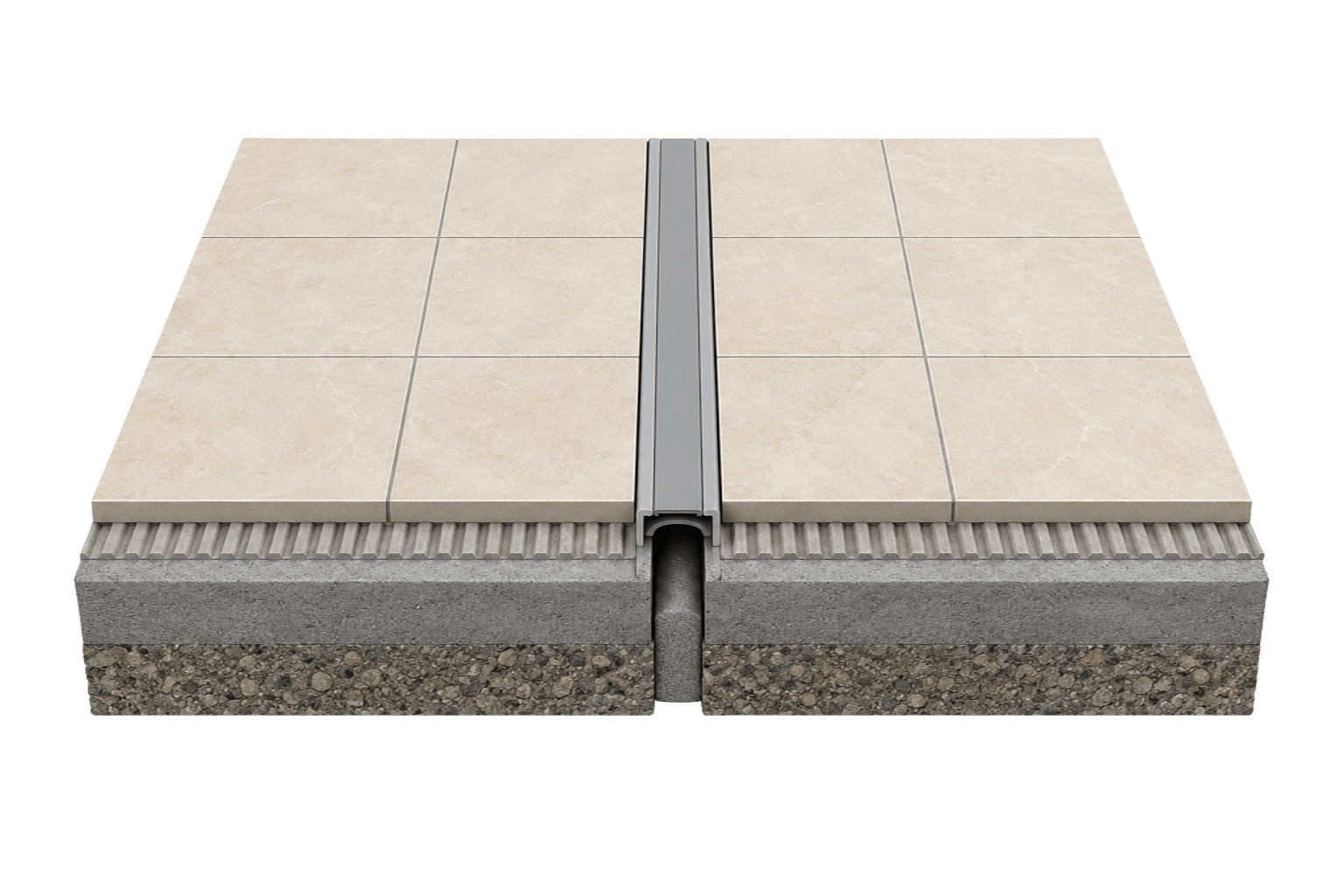
Tiles are designed to provide decades of reliable service, but even the highest-quality porcelain or ceramic tiles can fail if they cannot accommodate natural building movement. One of the most effective ways to prevent cracked tiles, tenting, debonding, and damaged grout is by incorporating movement joints in tiling into every installation. Whether you are tiling a bathroom, kitchen, patio, shopping centre, or office, understanding movement joints in tiling is essential for achieving a professional and long-lasting result.
Buildings are never completely static. Concrete shrinks as it cures, temperatures fluctuate throughout the day, moisture levels change with the seasons, and structural loads vary as people and furniture move through a building. These forces create expansion and contraction within the floor. Without properly positioned movement joints in tiling, pressure builds beneath the tiled surface until it eventually causes cracking, lifting, or grout failure.
In Kenya, tiled surfaces face additional challenges. Outdoor patios experience intense sunshine followed by heavy seasonal rainfall, while interior floors are affected by moisture, air conditioning, and everyday foot traffic. Correctly designed movement joints in tiling allow tiled areas to absorb these movements without transferring damaging stress to the tiles.
Before beginning any tiling project, consider:
- The size of the tiled area
- Indoor or outdoor installation
- Existing structural movement joints
- Tile size and material
- Subfloor condition
- Temperature exposure
- Suitable adhesive and grout
At KK Empire Trades Limited, we supply premium porcelain tiles, ceramic tiles, adhesives, grouts, sealants, and tiling accessories for residential and commercial developments throughout Kenya. Browse our products through the KK Empire Trades Limited Shop or learn more about our services on the About Us page.
Movement Joints in Tiling: What Are They and Why Do They Matter?
Movement joints are intentional gaps incorporated into a tiled installation to allow controlled expansion and contraction. Properly designed movement joints in tiling prevent stress from building beneath the tiled surface, significantly reducing the likelihood of cracked tiles, loose tiles, grout failure, and tile tenting.
Unlike grout joints, which separate individual tiles, movement joints in tiling are designed to absorb structural movement. They are normally filled with flexible sealants or specialised joint profiles that can compress and expand as conditions change.
Without adequate movement joints in tiling, the tiled surface has nowhere to release built-up pressure. Eventually, that pressure forces the tiles to crack, lift, or detach from the substrate.
The benefits include:
- Reduced risk of tile tenting
- Improved structural durability
- Longer tile lifespan
- Better moisture protection
- Lower maintenance costs
- Improved appearance over time
Planning movement joints in tiling should always form part of the installation design rather than being treated as an optional extra.
Movement Joints in Tiling: Why Floors Crack Without Them
One of the most common causes of cracked tiled floors is the absence of movement joints in tiling. Although tiles are extremely hard, they have very little flexibility. When the building beneath them expands or contracts, the stress transfers directly into the tiled finish.
Several factors contribute to floor movement:
- Daily temperature changes
- Concrete shrinkage
- Building settlement
- Moisture expansion
- Heavy furniture
- Continuous foot traffic
Without correctly positioned movement joints in tiling, these forces accumulate until the installation begins to fail.
Typical symptoms include:
- Cracked porcelain or ceramic tiles
- Hollow-sounding tiles
- Debonded adhesive
- Cracked grout joints
- Tile tenting
- Uneven tiled surfaces
Most of these failures are preventable through proper planning, quality installation materials, and professional workmanship.
Movement Joints in Tiling: Where They Should Be Installed
Correct placement is just as important as including the joints themselves. Movement joints in tiling should be incorporated wherever movement is expected so the tiled surface can respond naturally without damage.
Around Room Perimeters
Perimeter joints separate the tiled floor from surrounding walls.
These joints allow the floor to expand without pushing directly against rigid masonry or concrete.
At Doorways
Door openings often separate areas that experience different temperatures, loading conditions, or structural movement.
Including movement joints in tiling at these transition points helps prevent stress from transferring between adjoining rooms.
Over Structural Expansion Joints
Any structural expansion joint already present within the building should continue through the tiled finish.
Covering these joints with tiles prevents the building from moving as designed and frequently results in cracked tiles.
Around Fixed Structures
Movement joints should also be positioned around:
- Columns
- Staircases
- Lift shafts
- Service ducts
- Large fixed machinery
These elements move differently from surrounding floor slabs and require isolation from the tiled surface.
Movement Joints in Tiling: Recommended Spacing Guidelines
Correct spacing allows movement joints in tiling to distribute movement evenly across large tiled surfaces. The exact spacing depends on the installation environment, tile size, substrate, and manufacturer recommendations.
Professional installers typically assess:
- Overall floor dimensions
- Indoor or outdoor exposure
- Direct sunlight
- Underfloor heating (where applicable)
- Tile format
- Building movement
Large-format porcelain tiles often require particularly careful planning because fewer grout joints are available to accommodate movement.
Outdoor installations generally require more frequent movement joints in tiling than indoor projects because daily temperature swings produce greater expansion and contraction.
Movement Joints in Tiling: Perimeter and Expansion Joints Explained
Although both are essential, perimeter joints and expansion joints perform different functions within movement joints in tiling.
Perimeter Joints
Perimeter joints:
- Separate tiles from walls
- Allow expansion around room edges
- Reduce compressive stress
- Help prevent tile lifting
These joints are usually concealed beneath skirting boards or finishing trims.
Expansion Joints
Expansion joints divide large tiled surfaces into smaller sections that can move independently.
They usually contain flexible sealants capable of repeated compression and expansion without cracking.
| Joint Type | Purpose |
|---|---|
| Perimeter Joint | Allows expansion against walls |
| Expansion Joint | Divides large tiled areas |
| Structural Joint | Continues building movement joints |
| Flexible Sealant Joint | Absorbs expansion and contraction |
| Transition Joint | Separates different flooring finishes |
| Isolation Joint | Protects tiles around fixed structures |
Correctly designed movement joints in tiling are one of the simplest yet most effective ways to prevent cracked floors, grout failure, adhesive breakdown, and costly repairs. By incorporating these joints during the planning stage, homeowners and contractors can achieve durable tiled surfaces that continue performing well for many years.
Conclusion
Properly designed movement joints in tiling are one of the most important yet often overlooked elements of a successful tile installation. While quality tiles, adhesives, and grout all contribute to a durable floor, they cannot compensate for the stresses caused by natural building movement. Correctly positioned movement joints in tiling allow tiled surfaces to expand and contract safely, preventing cracked tiles, tile tenting, debonding, and grout failure.
Whether you are tiling a bathroom, kitchen, living room, commercial building, patio, or terrace, understanding movement joints in tiling helps protect your investment and significantly extends the lifespan of your tiled surfaces. Factors such as room size, exposure to sunlight, moisture levels, tile format, and substrate movement should always be considered during the planning stage to ensure the joints are positioned correctly.
Professional installation is equally important. Using flexible adhesives, quality sealants, and following recognised installation standards ensures movement joints in tiling continue to perform effectively throughout the life of the floor. Routine inspections and replacing worn sealants when necessary will also help maintain the integrity of the installation and prevent expensive repairs.
At KK Empire Trades Limited, we supply premium porcelain tiles, ceramic tiles, tile adhesives, grouts, movement joint profiles, sealants, and complete tiling accessories for residential and commercial projects across Kenya. Our experienced team can help you choose the right products and provide expert advice for installations that remain beautiful, safe, and durable for years to come.
Browse our complete product range through the KK Empire Trades Limited Shop:
shop
Or speak with our experts through our Contact Page:
contact-us
Contact KK Empire Trades Limited
Planning a new tiling project or need expert advice on movement joints in tiling? Our knowledgeable team is ready to help you select the right tiles, adhesives, grouts, sealants, and installation accessories for a durable, professional finish.
KK Empire Trades Limited
Website: https://kkempiretradesslimited.com/
Email: info@kketrades.com
Call / WhatsApp: +254 718 990 010
Delivery Across Kenya
We offer fast and reliable delivery throughout Kenya, including:
- Nairobi
- Kiambu
- Thika
- Kitengela
- Machakos
- Nakuru
- Kisumu
- Eldoret
- Mombasa
- Surrounding towns and counties
Why Choose KK Empire Trades Limited?
- Premium porcelain and ceramic tiles
- Professional tile adhesives, grouts, and sealants
- Complete tiling installation accessories
- Expert advice for homeowners, contractors, architects, and developers
- Competitive pricing and dependable nationwide delivery
- Quality products for residential, commercial, and industrial projects
KK Empire Trades Limited is your trusted supplier for premium tiling solutions in Kenya, helping you incorporate movement joints in tiling correctly to create attractive, durable, and long-lasting tiled floors and walls.


